
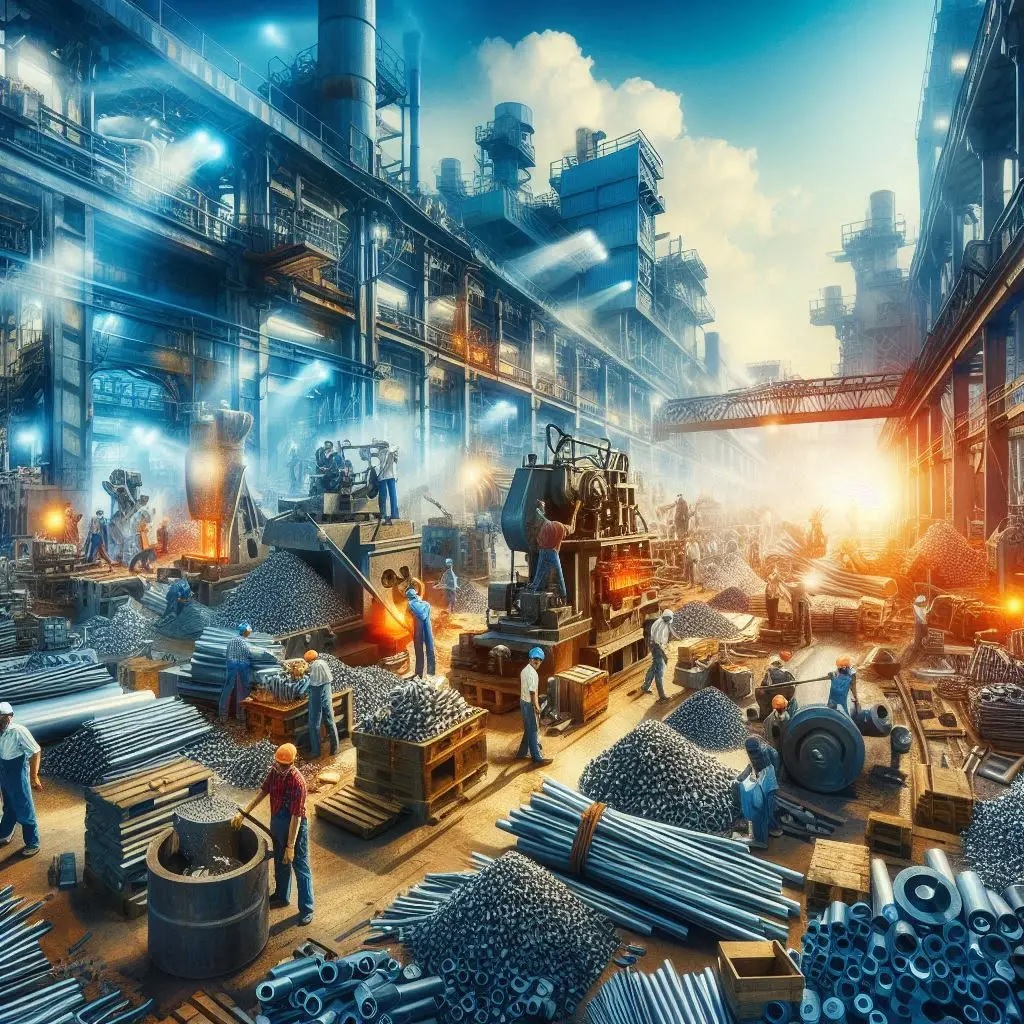
The forging business has experienced a transformation thanks to automation, which has switched labour-intensive procedures with smart production systems, AI-driven monitoring, and precise robots. Unlike casting or machining, forging redesigns metal using detail force, refining its interior grain structure. Industry 4.0 technologies removes faults, increase efficiency by 20–50%, and allow for real-time quality monitoring in everything from hot forging presses to cold heading lines. Leaders in Indian forging manufacturing combine these developments to create high-strength parts for power plants and oil and gas pipelines.
Robotic Handling Eliminates Manual Risks
One of the old styled forging relied on skilled operators maneuvering red-hot billets, exposing labours to burns and tiredness. Robotic arms has at present transfer parts among induction heaters, dies, and trim presses with sub-millimeter accurateness. Vision-guided systems detect defects mid-cycle, diverting rejects before trimming. Cycle times drop 25%, while safety incidents plummet 70%. Many India firms have started to accept these robots for stainless steel ball valve forgings, safeguarding consistent grain flow for huge-pressure service.
AI-Powered Predictive Maintenance Maximizes Uptime
AI systems use data from vibration sensors and thermal imaging on hammers and presses to forecast problems days in advance. Downtime from die cracks or press misalignment falls 40%, saving $500K annually per line. Digital twins simulate forging loads virtually, optimizing die designs before steel hits metal. Indian forges leverage this for automotive crankshafts and aerospace flanges, extending tool life by 2x.
CNC Precision Forging Achieves Near-Net Shapes
Servo-controlled hydraulic presses substitute mechanical flywheels, bringing programmable force outlines for isothermal forging of titanium alloys. Incremental forming robots create complex geometries without multi-stage dies, slashing tooling costs 60%. Closed-loop feedback adjusts stroke based on billet temperature, achieving ±0.1mm tolerances. This precision suits medical implants and EV battery housings. Forging parts manufacturer innovators use CNC for custom trunnion ball bodies, reducing machining from 40% to 5% of billet volume.
IoT-Enabled Smart Factories Optimize Energy
Connected sensors monitor rinse rates, billet preheat consistency, and furnace performance, constantly modifying settings to save gas use by 30%. Cloud platforms aggregate data across plants for enterprise-wide analytics, forecasting raw material needs. Energy recovery systems capture press waste heat for preheating. Sustainability gains align with net-zero mandates. Many forging parts manufacturer deploy IoT for duplex stainless forgings, minimizing scale loss and scrap rates.
Vision Systems Revolutionize Quality Assurance
After forgings are heated up, robotic cameras use machine learning to find surface fissures that are imperceptible to the human eye. In a matter of seconds, 3D laser scanning confirms dimensions with CAD models. Parts are routed for recycling or final machining by automated sorting. First-pass yields increase when defect rates fall below 0.5%. To ensure consistent quality for crucial service conditions, Indian manufacturers depend on Vision AI to analyse forged stems and flanges.
Additive Manufacturing Hybrids Expand Capabilities
Hybrid systems combine forging with laser cladding, repairing high-value dies in-situ or creating bimetallic components. Wire-arc additive builds near-net preforms, reducing forging tonnage by 50%. Topology optimization software designs lighter structures with superior fatigue resistance. Aerospace forgings evolve into multi-material hybrids. Indian valve manufacturer India pioneers apply this for erosion-resistant trim in slurry valves.
Workforce Up skilling Fuels Human-Machine Synergy
Augmented reality guides operators through die changes, while collaborative robots assist flash trimming. Digital twins train apprentices virtually, accelerating expertise transfer. Skilled roles shift to programming and analytics, retaining talent amid labour shortages. Forges report 15% productivity gains from reskilled teams. Advanced simulation tools help producers train on software for forging parameter twists.
Smart automation is elevating forging into a high-precision manufacturing self-restraint powered by robotics, AI, and IoT. Indian forges, including leading forging manufacturer India players, position themselves as global suppliers of mission-critical components. The future forges smarter, faster, and greener.
Freight Forwarding Services in Canada: How Progressive Cargo Simplifies Global Logistics
Freight forwarding plays a crucial role in today’s interconnected global economy. Business…