
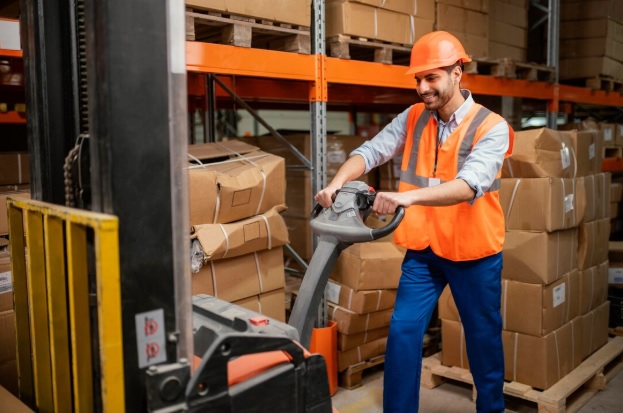
Safety in the workplace has become a priority in both industrial and warehouse settings, with ever-growing business demands, expected fast fulfillment times, and rising product volumes. Most traditional material handling processes pose workers at risk for heavy lifting, repetitive strain, forklift traffic, and the possibility of human error. Thus, this setup challenges the call for much safer and more intelligent systems. This is where material handling and automation play a transforming role, by minimizing physical strain, enhancing consistency in processes, and forming controlled operational environments.
Automation technologies combined with robotics and intelligent software in general contribute to eradicating any hazards caused by manual workflows: efficient goods transport, safer warehousing, and better insights into material flow. From robotic pallet movement to automated picking and guided transport, automation builds a safer and more predictable workplace with fewer accidents and less downtime.
Automate to Enhance Safety
Many workplace injuries take place due to repetitive motion, wrong lifting, and crowded traffic zones of warehouse floors. The volumes of products continuously rise. This places greater demands on manual sorting and picking tasks and materials handling. Automation of such activities reduces high dependencies on heavy labour. At a point when robots’ functions become more repetitive and hazardous for the workers, employees can fall into safer zones in order to perform supervision or analytical tasks.
Reduced Physical Strain from Manual Lifting
Heavy lifting due to manual material transportation remains one of the most common sources of injury in warehouses. It is important to be informed that such automation technologies as autonomous mobile robots and pallet handling systems perform all the heavy-lifting tasks without making workers handle heavy cargo. In this way, their fatigue is reduced, leading to the prevention of musculoskeletal injuries and the improvement of well-being even in the long term.
Minimum Chance of Accidents in High Traffic Areas
The chances of collision go up manifold due to the movement of forklifts and the crowding of the aisles. The automated guided systems and robotic vehicles create safer navigation routes by providing a width for easy passage. These systems are predictable in their motion and also follow the programmed paths, hence reducing the chance of accidents that may involve a human factor.
Smarter Handling is What Creates Better Accuracy.
It invites potential errors in manual picking or sorting, unsafe stacking, improper weight distribution, and possible product damage. In coordination with automated sorting, automation allows for the accurate identification, routing, and placement of items to improve operational safety and product integrity.
Improved Visibility Through Warehouse Operations.
Safety is generally assured through the close awareness of the movement of materials. Automation systems capture real-time data, hence facilitating the process for managers to track inventory flow, hasten the process of escalating issues, and take necessary preventive measures. Better visibility supports proactive risk management and reduces workplace hazards.
Limit the Amount of Time Spent in Hazardous Areas.
Some of the areas that are targeted in a warehouse include areas that are sensitive to temperature, narrow aisles, or some that require high stacking; these are the areas that are easily worked by robots, thereby limiting human workers from dangerous activities.
Supporting Standardised and Safe Operating Procedure
Human-driven processes are usually inconsistent between one worker and another. In some cases, this may lead to hazardous situations. Material handling and automation standardize tasks so that every move, pick, and sort occurs according to the predefined rules. This would mean more predictable, thus much safer, operations.
Addverb’s Role in Advancing Workplace Safety Through Automation
Addverb plays a notable role in enabling safer industrial environments through its advanced automation ecosystem. The company designs and manufactures robotics, automated storage systems, and intelligent software that work together to streamline material handling across warehouses. Through solutions such as autonomous mobile robots, intelligent picking technologies, and automated sorting systems, Addverb reduces human involvement in repetitive and high risk activities. Their integrated approach enhances accuracy, minimises manual strain, and creates safer material movement pathways. Addverb’s automation systems can be deployed across both new and existing facilities, ensuring flexibility and scalability for diverse industries.
How Automation Creates a Culture of Safety
Automation does more than reduce injuries. It encourages a workplace culture where safety becomes a central part of operations. Robots enable continuous workflow without fatigue, and intelligent software ensures consistent, rule-based movement across the warehouse. With fewer manual interventions, workers can focus on oversight, decision-making, and value-driven tasks. This shift fosters a safer and more efficient work environment.
Conclusion
Material handling and automation play a crucial role in creating safer workplaces by reducing physical strain, improving consistency, and minimizing the risks associated with manual tasks. Technologies such as autonomous systems and the automated sorting system enable controlled and predictable operations that support long-term employee safety. Companies like Addverb contribute significantly to this transformation by offering integrated robotics and software solutions that simplify material handling, optimise movement, and build safer warehouse environments. As automation becomes more widespread, organisations adopting these systems will experience stronger safety outcomes, greater efficiency, and more resilient industrial operations.
Freight Forwarding Services in Canada: How Progressive Cargo Simplifies Global Logistics
Freight forwarding plays a crucial role in today’s interconnected global economy. Business…