
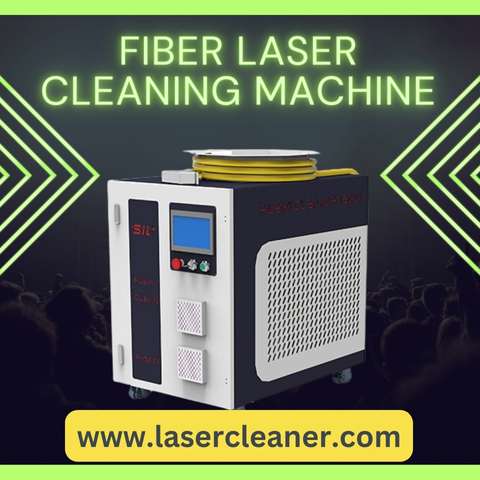
The fiber laser cleaning machine has emerged as a revolutionary solution for industrial cleaning processes, transforming the way surfaces are prepared, maintained, and restored. Unlike traditional cleaning methods, fiber laser cleaning machines operate using highly concentrated light energy to remove contaminants, coatings, oxides, and rust from a variety of surfaces. This technology leverages the precision of fiber lasers, enabling exact targeting of affected areas while preserving the integrity of the underlying material. Industries across the globe are rapidly adopting fiber laser cleaning machines to meet the growing demand for high-precision, efficient, and environmentally responsible cleaning solutions.
At its core, a fiber laser cleaning machine uses the principle of photothermal ablation. When the laser beam interacts with unwanted material on a surface, the energy is absorbed, causing the material to evaporate or dislodge from the substrate. This process allows for a level of control that conventional abrasive, chemical, or mechanical cleaning methods cannot achieve. The laser’s ability to focus on minute areas enables operators to address intricate parts, delicate surfaces, and complex geometries with accuracy that meets industrial standards.
Fiber laser cleaning machines are widely utilized in metal fabrication and manufacturing industries. Surfaces such as steel, aluminum, copper, and other alloys can be efficiently cleaned without the need for harsh chemicals or mechanical abrasion. This is particularly crucial in environments where the quality of surface preparation directly affects subsequent manufacturing processes, such as welding, coating, or assembly. The precision and repeatability of fiber laser cleaning also ensure consistent results, reducing the variability often encountered with manual cleaning methods.
Beyond metals, fiber laser cleaning machines are also applied to non-metallic surfaces, including ceramics, composites, and certain plastics. This versatility opens doors for industries such as aerospace, automotive, electronics, and art restoration. For instance, in the automotive sector, these machines can remove paint layers, contaminants, and oxidation from components during refurbishment or repair, improving adhesion and surface performance. In electronics, fiber laser cleaning ensures the removal of minute contaminants from delicate circuit boards without damaging the underlying components.
The operation of fiber laser cleaning machines involves several adjustable parameters, such as laser power, pulse frequency, and scanning speed. Operators can customize these settings to match the type of surface and the nature of the contamination. This adaptability is essential in environments where a wide range of materials and conditions must be addressed. The machine’s control systems often include programmable scanning patterns and real-time monitoring, enabling precise and efficient cleaning with minimal human intervention.
Industrial maintenance is another area where fiber laser cleaning machines demonstrate significant value. Corrosion, oxidation, and other surface degradations are common challenges in industries that rely on long-lasting equipment performance. Fiber laser cleaning machines allow for targeted removal of these surface imperfections without dismantling or replacing machinery. This capability extends the lifespan of components, reduces downtime, and ensures that production processes remain uninterrupted.
The environmental impact of fiber laser cleaning machines is another factor contributing to their widespread adoption. By eliminating the need for chemical cleaning agents and reducing waste, these machines support sustainable industrial practices. Waste material generated from the laser cleaning process is often minimal, and in many cases, it can be collected and disposed of safely. Additionally, the process generates less airborne particulate matter compared to sandblasting or other abrasive cleaning methods, improving workplace safety and compliance with environmental regulations.
Automation and integration are increasingly common with fiber laser cleaning machines. Modern systems can be incorporated into production lines, allowing for continuous cleaning operations without manual handling. Robotic arms equipped with fiber laser heads can access difficult-to-reach areas, ensuring consistent cleaning quality across large-scale manufacturing facilities. These automated solutions are particularly valuable in high-volume production environments, where efficiency, precision, and repeatability are critical to maintaining product quality.
The adoption of fiber laser cleaning technology also supports quality control and surface analysis. By ensuring a clean, contaminant-free surface, manufacturers can achieve better adhesion for coatings, paints, and bonding agents. This improves product reliability and reduces the likelihood of defects caused by surface irregularities. In addition, the precise control offered by fiber laser cleaning machines allows for selective treatment, where only targeted areas require cleaning, further enhancing material conservation and reducing operational costs.
Training and operator expertise play a key role in maximizing the performance of fiber laser cleaning machines. Operators must understand material properties, contamination types, and laser interaction principles to achieve optimal results. Many manufacturers provide specialized training programs to equip users with the skills necessary to adjust machine parameters, plan cleaning strategies, and maintain equipment for long-term efficiency. Proper operation ensures consistent cleaning results, reduces maintenance needs, and extends the machine’s operational lifespan.
As industrial demands continue to evolve, fiber laser cleaning machines are becoming indispensable tools for high-precision cleaning, surface preparation, and maintenance. Their ability to efficiently clean diverse materials while preserving underlying surfaces positions them as a preferred choice across multiple sectors. By integrating these machines into production and maintenance workflows, businesses can enhance productivity, improve product quality, and implement sustainable practices without compromising on performance or accuracy.
In conclusion, the fiber laser cleaning machine represents a technological advancement in industrial cleaning processes. Its precision, versatility, and environmental benefits make it an essential tool for manufacturers, maintenance teams, and specialty applications. By providing controlled, efficient, and highly adaptable cleaning solutions, these machines redefine how industries approach surface preparation, maintenance, and restoration. Fiber laser cleaning is not only a practical solution but also a transformative technology shaping the future of industrial operations.
Freight Forwarding Services in Canada: How Progressive Cargo Simplifies Global Logistics
Freight forwarding plays a crucial role in today’s interconnected global economy. Business…