
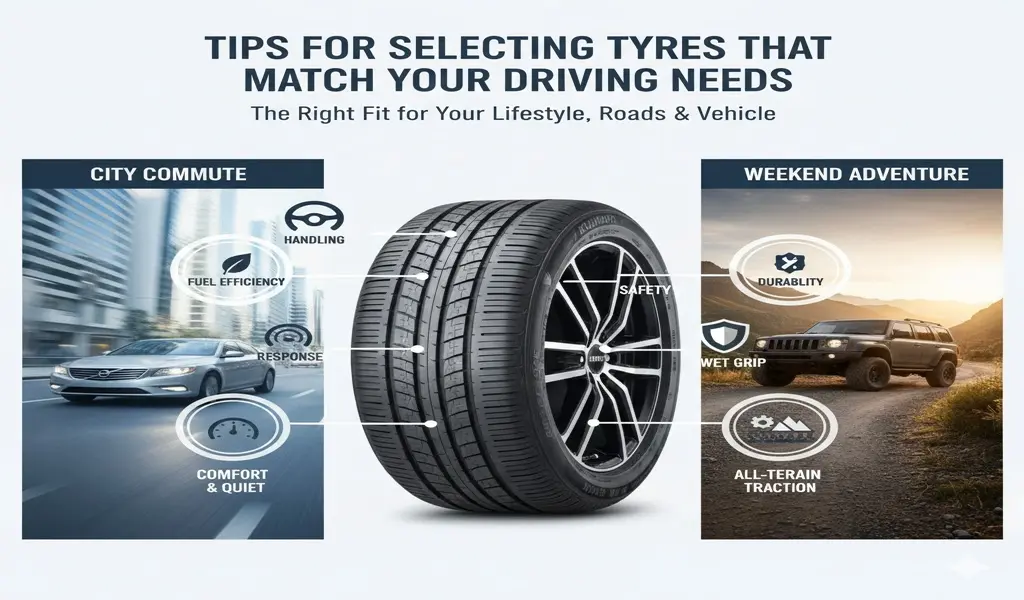
Driving in the United Arab Emirates offers a unique mix of experiences. You might find yourself cruising on the expansive Sheikh Zayed Road one minute. Next, you could be navigating the tight and busy streets of Deira or Bur Dubai. Your vehicle is your primary companion in navigating these diverse environments. However, the performance of your car relies heavily on one critical component.
Your tyres are the only physical connection between your vehicle and the ground. This makes them the most important safety feature you have. Therefore, selecting the right tyres is not just about picking the correct size. It is about finding a match for your specific lifestyle and driving habits.
Many drivers often overlook this aspect of car maintenance until it is too late. They might choose the cheapest option or simply replace what was there before. However, technology has advanced significantly in recent years. There are now specialized options for every type of driver.
Whether you prioritize fuel economy, comfort, or high-speed stability, there is a tyre for you. Understanding how to choose can save you money and keep you safe. This guide will walk you through the essential tips for making an informed decision.
Why Choosing the Right Tyres Matters More Than You Think
It is easy to view tyres as simple black rubber circles that hold air. However, they are complex engineering marvels designed to handle immense forces. The process of selecting the right tyres impacts almost every aspect of your driving experience. From how the car turns to how quickly it stops, tyres are central.
In the UAE, where conditions can be extreme, this importance is magnified. A tyre that performs well in Europe might fail quickly in the Gulf summer. The heat places stress on the rubber compounds that can lead to failure. Choosing wisely ensures your vehicle remains reliable throughout the year.
Safety is the most obvious reason to pay attention to your tyre choice. However, comfort is equally important for daily commuters. A noisy or hard tyre can make a drive to Abu Dhabi exhausting. The right set of tyres transforms your journey into a smooth experience.
Tyres as the Only Contact With the Road
The contact patch of a tyre is roughly the size of a human hand. That small area is responsible for supporting the entire weight of the car. It must also transfer engine power to the road and handle braking forces.
When you slam on the brakes, you rely entirely on that rubber grip. If the compound is too hard or the tread is wrong, stopping distances increase. This can be the difference between a safe stop and a collision.
Stability during cornering also depends on sidewall stiffness and grip. A tyre suited to your vehicle helps maintain control during sudden maneuvers. This is vital when dodging debris or avoiding erratic drivers on the highway.
The Cost of Choosing the Wrong Tyres
Buying unsuitable tyres often leads to higher costs in the long run. If a tyre is not designed for your usage, it will wear out unevenly. This forces you to replace them much sooner than expected.
Fuel consumption is another hidden cost of poor tyre selection. Tyres with high rolling resistance make the engine work harder. This burns more fuel, which adds up significantly over thousands of kilometers.
There is also the cost of potential suspension damage. A tyre that does not absorb bumps correctly transmits shock to the car. This can wear out shock absorbers and bushings prematurely.
Understanding Your Daily Driving Needs
Before you walk into a tyre shop, you must analyze your routine. Selecting the right tyres requires an honest assessment of how you use your car. A driver who stays in the city has different needs than a highway commuter.
You should consider the distances you cover daily. Think about the type of roads you encounter most frequently. Your driving style, whether aggressive or relaxed, also plays a role.
By understanding these factors, you can narrow down the vast market options. You can focus on features that actually benefit your daily life. This targeted approach ensures you get the best value for your money.
City Driving Versus Highway Driving
City driving involves frequent stops, starts, and sharp turns. You encounter potholes, speed bumps, and tight parking spaces. Tyres for this environment need durability and good braking response.
They must handle the friction of constant acceleration and deceleration. Fuel efficiency is also key here, as stop-start traffic consumes more gas. Low rolling resistance tyres are often excellent for urban environments.
Highway driving, on the other hand, prioritizes stability and heat dissipation. Sustained high speeds generate internal heat in the tyre structure. You need a tyre that runs cool and tracks straight to reduce driver fatigue.
Short Trips Versus Long Distance Travel
Short trips often mean the tyres do not reach optimal operating temperature. You need a compound that provides grip even when relatively cool. This ensures safety from the moment you leave your driveway.
Long-distance travel pushes tyres to their endurance limits. Driving from Dubai to Fujairah involves changing road textures and temperatures. Comfort becomes a major priority for these longer journeys.
If you frequently travel with family and luggage, load capacity matters. Selecting the right tyres means ensuring they can handle the extra weight. This prevents blowouts and ensures stability at highway speeds.
How UAE Road and Weather Conditions Affect Tyre Choice
The driving environment in the UAE is unlike many other places. We have world-class infrastructure mixed with extreme environmental factors. This combination dictates specific requirements for vehicle maintenance.
The intense summer heat is the biggest enemy of rubber components. UV radiation and high ambient temperatures accelerate aging. Your tyre choice must account for these harsh realities to ensure longevity.
Sand is another factor, even on paved roads. A fine layer of dust can reduce traction unexpectedly. Tread patterns that can clear this dust are beneficial for maintaining grip.
Hot Weather and Asphalt Temperatures
While air temperature might be 45 degrees Celsius, the road is hotter. Black asphalt absorbs solar radiation and can reach over 60 degrees. This cooks the tyre from the outside while friction heats it from the inside.
You need tyres with advanced heat-resistant compounds. These are often labeled with high temperature ratings (usually ‘A’). They resist softening excessively, which prevents rapid wear.
Standard tyres designed for cold climates will degrade rapidly here. They might develop cracks or separate at the tread. Always ensure your tyres are GCC compliant for this reason.
Smooth Highways and Urban Roads
Most major roads in the UAE are incredibly smooth. This allows for tyres with less aggressive tread patterns. You do not need deep mud lugs for Sheikh Zayed Road.
A smoother tread pattern offers a quieter ride on these surfaces. It also improves the contact patch for better dry grip. However, the occasional rain shower can make these smooth roads slippery.
Therefore, you still need decent water evacuation channels. Oils on the road rise to the surface when it rains. A good all-season or summer tyre handles this balance perfectly.
Key Tyre Features You Should Always Check
When selecting the right tyres, you need to look at the sidewall. It contains a code that tells you everything about the tyre’s capabilities. Understanding this code prevents you from buying the wrong product.
It helps you verify that the tyre matches your vehicle manufacturer’s specifications. Never guess when it comes to these numbers. They are calculated engineering requirements for your safety.
Comparing these features allows you to judge value. You can see why one tyre costs more than another. It usually comes down to speed ratings, load capacity, and technology.
Tyre Size, Load Index, and Speed Rating
The size sequence (e.g., 245/40R19) must match your wheel rims. The load index is a number that indicates maximum weight capacity. This is crucial for SUVs that carry heavy loads.
If you choose a lower load index, the tyre may blow out. The speed rating is a letter (like V, W, or Y) indicating maximum safe speed. In the UAE, legal speeds reach 140km/h or 160km/h.
Your tyres must be rated for speeds higher than you intend to drive. This provides a safety buffer against heat buildup. Never downgrade the speed rating recommended by the car maker.
Tread Patterns and Noise Levels
Tread patterns come in symmetrical, asymmetrical, and directional designs. Asymmetrical patterns often provide the best balance of dry and wet grip. They are very popular for high-performance sedans.
Noise levels are often indicated on the tyre label. Lower decibel ratings mean a quieter cabin environment. This significantly reduces stress during long commutes.
Look for features like “silica compound” or “noise-canceling blocks.” These technologies improve comfort without sacrificing grip. It is worth paying extra for silence if you drive long distances.
Matching Tyres With Your Vehicle Type
A sports car needs different footwear than a heavy 4×4. Selecting the right tyres means respecting the vehicle’s design intent. Putting truck tyres on a sedan ruins the ride quality.
Conversely, putting car tyres on an SUV is dangerous. They may not handle the weight or the higher center of gravity. You must choose a category of tyre built for your specific vehicle class.
Manufacturers spend millions tuning suspension to specific tyre types. Staying within that category preserves the handling characteristics you enjoy. It ensures the safety systems work as designed.
Sedans, SUVs, and Crossovers
Sedans usually prioritize smooth rolling and low noise. They benefit from “touring” class tyres that offer long tread life. These tyres are designed for efficiency and comfort.
SUVs and Crossovers put more stress on the sidewalls. They need tyres with reinforced construction to prevent rolling in corners. This stability is vital to prevent rollover accidents.
If you have a 4×4 but stay on the road, choose “Highway Terrain” (HT) tyres. They offer the strength of a truck tyre with the manners of a car tyre. They are the best choice for most UAE SUV owners.
Family Cars Versus Performance Vehicles
Family cars focus on safety margins and durability. You want a tyre that stops well and lasts a long time. High-performance grip at the limit is less important than predictability.
Performance vehicles need tyres that stick to the road aggressively. These often have softer compounds that wear out faster. However, they allow the car to use its full power potential.
Do not put cheap economy tyres on a high-horsepower car. You will lose traction constantly and compromise safety. Match the performance level of the tyre to the engine power.
When and How to Replace Your Tyres
Knowing when to replace your tyres is just as important as choosing them. In the UAE, heat ages rubber even if the tread is not worn. You should inspect your tyres regularly for signs of degradation.
The legal tread limit is 1.6mm, but you should change them sooner. Performance drops off significantly below 3mm. Being proactive prevents accidents and roadside breakdowns.
Selecting the right tyres also involves timing the purchase. Don’t wait until a blowout forces you to buy whatever is available. Plan ahead to get the exact model you want.
Signs Your Current Tyres No Longer Suit Your Driving
If you feel vibrations through the steering wheel, check your tyres. This can indicate uneven wear or internal separation. Increased road noise is another sign of rubber hardening.
If the car feels slippery on roundabouts, your grip is gone. This happens as the volatile oils evaporate from the rubber. It makes the tyre feel like hard plastic rather than grippy rubber.
Visible cracks on the sidewall are a serious warning sign. This “dry rot” means the structure is compromised. Replace these tyres immediately regardless of tread depth.
Choosing the Correct Replacement Size
When it is time to buy, stick to the original size. Changing sizes can affect your speedometer accuracy and gear ratios. It can also cause rubbing against the suspension components.
Always consult your owner’s manual or the door jamb sticker. These provide the definitive list of approved sizes. Deviating from this can void your warranty or insurance.
For many mid size SUVs and sedans, drivers often look for common sizes like 235/55r18 when replacing worn tyres to maintain comfort and handling balance. Using popular sizes often means better availability and fresher stock. It ensures you are not buying old tyres that sat in a warehouse.
Frequently Asked Questions
How do I know which tyres suit my driving needs?
Consider your daily routes, speed habits, and vehicle type.
Do UAE weather conditions affect tyre selection?
Yes, heat resistant tyres perform better and last longer.
Is tyre size important when replacing tyres?
Yes, using the correct size ensures safety and proper handling.
Can wrong tyres increase fuel consumption?
Yes, incorrect tyres increase rolling resistance.
How often should tyres be replaced in the UAE?
Typically every three to five years, depending on use.
Conclusion
Your journey to selecting the right tyres leads to safer roads for everyone. It is a decision that affects your wallet, your comfort, and your safety. Taking the time to understand your needs pays off every time you drive.
Remember to consider the unique challenges of the UAE climate. Prioritize heat resistance and reliable handling over aggressive looks. Match the tyre to your specific vehicle and daily routine.
By making an informed choice, you ensure your car performs at its best. You protect your passengers and enjoy a smoother ride. Make tyre selection a priority, not an afterthought.
Freight Forwarding Services in Canada: How Progressive Cargo Simplifies Global Logistics
Freight forwarding plays a crucial role in today’s interconnected global economy. Business…