
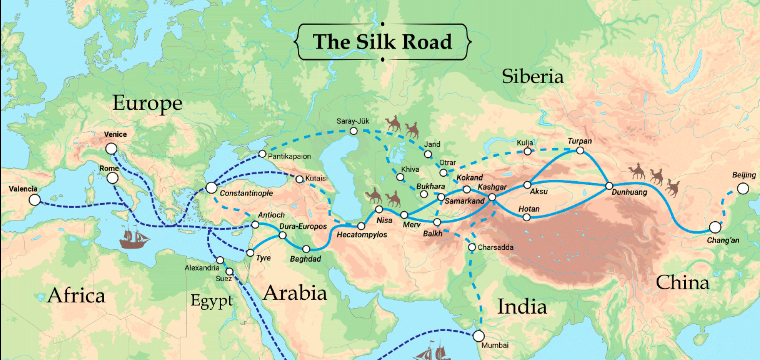
The Silk Roads have long fascinated historians, travelers, and adventurers alike. A detailed silk roads map can reveal the intricate network of trade routes that connected East and West, bridging continents, cultures, and civilizations. These legendary routes were more than just paths for commerce; they were conduits of ideas, art, religion, and innovation. Today, exploring the Silk Roads through maps and guides provides an opportunity to trace the footsteps of merchants, pilgrims, and explorers who shaped the world we know today.
The Historical Significance of the Silk Roads
The Silk Roads were established over 2,000 years ago, linking China with Europe, the Middle East, and South Asia. They earned their name from the lucrative silk trade that originated in China, but the routes facilitated the exchange of much more than textiles. Spices, precious metals, ceramics, and exotic animals all traveled these roads, transforming economies and cultures along the way.
A silk roads map is an invaluable tool for understanding the scope of this network. From the deserts of Central Asia to the bustling ports of the Mediterranean, these routes demonstrate how geography and human ingenuity shaped international trade long before the modern era. Each path on the map tells a story of risk, reward, and cross-cultural exchange.
Key Routes and Strategic Hubs
The Silk Roads were not a single road but a complex web of interconnected paths. Major routes included the northern route through the steppes of Mongolia, the southern route via India, and the maritime routes connecting ports in Southeast Asia to the Middle East. Key hubs like Samarkand, Kashgar, and Baghdad became thriving centers of commerce, attracting merchants from distant lands.
By studying a silk roads map, travelers and history enthusiasts can identify these strategic locations and appreciate the sheer scale of trade that occurred. These hubs were melting pots of culture, where art, science, and religion flourished. Temples, caravanserais, and markets sprung up along these paths, many of which still stand as historical monuments today.
Cultural Exchange and the Spread of Knowledge
One of the most fascinating aspects of the Silk Roads is the cultural exchange they enabled. Along these routes, not only goods but also ideas traveled. Buddhism spread from India to China, Islamic knowledge reached Central Asia, and European innovations found their way eastward.
A silk roads map illustrates the interconnectedness of these civilizations and highlights how geography influenced the flow of knowledge. Each junction along the route became a conduit for learning, helping to shape literature, art, and science across continents. Travelers today can use these maps to follow the ancient trails of scholars and artisans, discovering the enduring legacy of cross-cultural dialogue.
Modern Exploration and Travel
While the Silk Roads thrived in ancient times, they remain a source of inspiration for modern travelers. Adventure seekers and history enthusiasts can use silk roads map resources to plan journeys that retrace these historic routes. Modern infrastructure allows access to key historical sites, and guided tours offer immersive experiences that bring the past to life.
Exploring these routes today offers a unique perspective on global history. Visitors can witness the remnants of trading cities, ride along desert paths, and experience the cultures that evolved through centuries of interaction. Each stop on the route offers a story, and a silk roads map serves as both a guide and a gateway to understanding the full breadth of this historical network.
The Educational Value of Silk Roads Maps
For students, educators, and enthusiasts, a silk roads map is more than just a visual representation. It is an educational tool that provides insights into economic history, geography, and cultural diffusion. Maps allow learners to contextualize historical events, understand trade patterns, and analyze the influence of the Silk Roads on the modern world.
Interactive maps and online resources make it easy to explore these ancient routes from anywhere in the world. By integrating a silk roads map into educational programs, teachers can create engaging lessons that connect students with the past in a tangible and visual way.
Conclusion: A Journey Through Time
The Silk Roads remain one of history’s most remarkable achievements, demonstrating the power of trade, exploration, and human connection. Using a silk roads map to explore these routes provides a deeper appreciation for the cultural and economic networks that shaped our world. Whether you are a history enthusiast, a traveler, or an educator, these maps open a window into a time when distant lands were intricately connected through commerce and shared knowledge.
By studying these routes and visiting the historical sites along the way, you can embark on a journey that transcends time and geography. The Silk Roads continue to inspire curiosity, adventure, and understanding, reminding us that human ingenuity and cultural exchange have always been central to our shared story.
Freight Forwarding Services in Canada: How Progressive Cargo Simplifies Global Logistics
Freight forwarding plays a crucial role in today’s interconnected global economy. Business…