
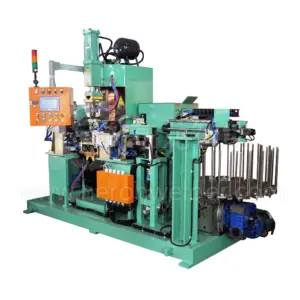
In modern manufacturing, precision, speed, and reliability are essential for efficient metal joining. Among the most versatile solutions, resistance welders stand out as a cornerstone technology for automotive, electronics, appliance, and industrial fabrication industries. Heron Welder, a global leader in welding solutions, offers advanced resistance welding machines and automation systems designed to meet the highest quality standards. In this guide, we’ll explore the principles, applications, types, and best practices of resistance welding while highlighting how Heron’s expertise can transform your production line.
What is a Resistance Welder?
A resistance welder is a machine that joins metal parts using the heat generated from electrical resistance. Unlike traditional fusion welding, which melts filler material, resistance welding relies on the metals’ inherent resistance to electrical current. This results in a strong, precise, and repeatable weld with minimal distortion.
Key components of a resistance welder include:
-
Electrodes: Conduct electricity and apply pressure to the workpieces.
-
Transformer: Supplies the required current for the welding process.
-
Controller: Monitors and regulates current, pressure, and timing.
-
Frame and tooling: Holds and positions the workpieces accurately.
Heron Welder’s machines are engineered with precision controllers, robust electrodes, and customizable automation options, enabling consistent performance across diverse production environments.
Principles of Resistance Welding
The fundamental principle behind resistance welding is Joule heating, where electrical energy converts into thermal energy at the contact points between metals. The formula governing this process is:
Heat (H) = I² × R × t
Where:
-
I = Welding current
-
R = Electrical resistance of the workpiece
-
t = Welding time
By carefully controlling current, pressure, and duration, manufacturers can achieve strong welds without compromising the base metal’s integrity.
Types of Resistance Welders
Heron offers a comprehensive range of resistance welding machines, each designed for specific industrial applications:
Spot Welding
-
Ideal for joining thin sheets in automotive panels, electronics, and appliance manufacturing.
-
Provides fast cycle times and high repeatability.
Projection Welding
-
Uses embossed projections on one workpiece to localize current flow.
-
Suitable for components with complex geometries or thicker materials.
Seam Welding
-
Creates continuous welds along metal edges.
-
Commonly used in fuel tanks, HVAC ducts, and piping.
MFDC and Capacitor Discharge Welding
-
MFDC (Medium Frequency Direct Current): Offers precise control for aluminum and coated steel.
-
Capacitor Discharge (CD): Produces extremely fast, high-quality welds for small parts.
Heron’s portfolio includes fully automated lines that integrate spot, projection, and seam welding into one cohesive system, enhancing production efficiency and reducing labor costs.
Applications of Resistance Welding
Resistance welding is widely used in industries that require strong, repeatable, and high-speed metal joining:
-
Automotive: Body panels, structural components, battery tabs for EVs.
-
Appliance Manufacturing: Refrigerators, ovens, washing machines.
-
Electronics: Connectors, terminals, and precision enclosures.
-
Aerospace and Defense: Lightweight aluminum and steel assemblies.
-
Industrial Fabrication: Pipes, HVAC ducts, and sheet metal assemblies.
Heron’s customized solutions enable manufacturers to optimize production for each specific application, from manual welding guns to fully automated lines with robotic integration.
Advantages of Using Heron Resistance Welders
-
High Precision: Consistent weld quality with minimal distortion.
-
Energy Efficiency: Optimized MFDC and CD systems reduce power consumption.
-
Automation Ready: Easily integrates with robotic arms and production lines.
-
Versatility: Handles multiple materials including steel, aluminum, and coated metals.
-
Expert Support: Engineering consultation, maintenance, and training services.
By selecting Heron, manufacturers gain access to cutting-edge technology and global expertise in resistance welding, ensuring operational excellence and ROI.
Best Practices for Resistance Welding
To achieve optimal results with resistance welders, consider these best practices:
-
Correct Electrode Maintenance: Regularly dress electrodes to maintain proper shape and conductivity.
-
Parameter Optimization: Adjust current, pressure, and weld time based on material type and thickness.
-
Workpiece Preparation: Ensure clean, oxide-free surfaces for reliable welds.
-
Routine Inspection: Use destructive and non-destructive testing to verify weld quality.
-
Automation Integration: Combine welding machines with conveyors, robotics, and controllers for consistent high-volume production.
Heron’s engineers work with clients to implement these best practices, customizing machine settings for each application.
Resistance Welder vs. Other Welding Techniques
| Feature | Resistance Welding | MIG/TIG Welding | Laser Welding |
|---|---|---|---|
| Speed | High | Moderate | Very High |
| Precision | Excellent | High | Excellent |
| Automation | Easily Automated | Moderate | High |
| Heat Input | Localized | Higher | Very Low |
| Material Types | Steel, Aluminum, Coated | Broad | Limited |
Resistance welding is particularly advantageous for mass production due to its repeatability, speed, and minimal post-processing requirements.
FAQs About Resistance Welders
Q1: Can resistance welders join aluminum and steel together?
Yes, using MFDC technology and proper electrode design, Heron welders can reliably join dissimilar metals.
Q2: How do I know which type of resistance welder is right for my application?
Heron provides engineering consultations to assess your material, production volume, and geometry to recommend the ideal solution.
Q3: What maintenance is required for resistance welding machines?
Regular electrode dressing, inspection of cables, and periodic calibration of controllers are essential for consistent performance.
Q4: Can resistance welding be automated?
Absolutely. Heron offers fully automated welding lines integrated with robotics, conveyors, and PLC controllers for high-volume production.
Q5: What industries benefit most from resistance welding?
Automotive, electronics, appliances, aerospace, and general metal fabrication are primary industries where resistance welding adds value.
Conclusion
A resistance welder is a critical investment for manufacturers seeking high-speed, precise, and cost-effective metal joining solutions. From spot and seam welding to advanced MFDC and capacitor discharge technologies, Heron Welder provides tailored solutions that meet the demands of modern production lines.
Ready to enhance your manufacturing capabilities? Contact Heron today to request a quote or consult our experts on custom resistance welding machines and automated production lines. Elevate your metal-joining processes with Heron’s global expertise.
Freight Forwarding Services in Canada: How Progressive Cargo Simplifies Global Logistics
Freight forwarding plays a crucial role in today’s interconnected global economy. Business…