
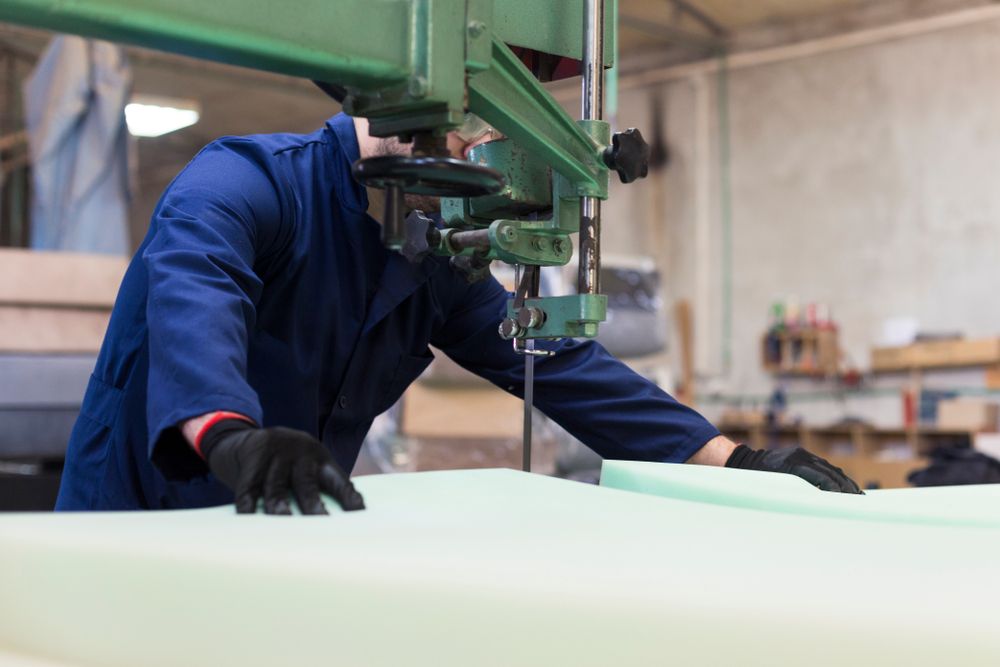
India’s industrial environment has evolved rapidly over the last two decades, and materials engineering has played an important role in that transformation. Among these materials, polyurethane foam has emerged as a key component in a variety of sectors, including furniture and automotive, as well as acoustics, filtration, and other industrial uses. Today, foam manufacturing companies in India are not simply concerned with volume production. They are advancing industrial foam technology through material science, precision manufacturing, and process-driven innovation.
This shift has positioned India as a serious global contributor in advanced foam solutions, supporting both domestic manufacturing and international supply chains.
The Changing Role of Foam Manufacturing Companies in India
Traditionally, foam was viewed as a comfort material, used primarily in mattresses, seating, and cushioning. Modern industrial requirements have expanded that role significantly. Foam is currently designed to control sound, airflow, vibration, filtration, thermal stability, and structural integrity.
Leading foam manufacturing companies in India have adapted by investing in improved production systems, laboratory testing, and application-specific foam formulations. The emphasis has moved from generic grades to purpose-built materials designed for consistent performance under real-world industrial conditions.
This evolution is driven by industries that prioritize reliability, compliance, and long service life rather than short-term cost advantages.
Advancing Material Science Through High-Density Foams
High-density foam grades have been utilized widely, which is one of the most significant developments in industrial foam technology. In contrast to low-density foams, which are often used in cushioning soft foams, high-density foams are more durable, can sustain loads, and endure compression over time.
As high density foam manufacturers in India, leading players focus on tight control over foam chemistry, cell structure, and density distribution. These parameters have a direct impact on the reliability of the foam under repeated stress, heat, and prolonged working period conditions.
High-density foams are widely used in:
- Industrial seating and transport interiors
- Automotive components
- Packaging for sensitive equipment
- Acoustic and vibration-damping applications
- Structural support layers in furniture and infrastructure
One distinct advantage is the ability to maintain a consistent density even when producing in bulk. It requires advanced mixing systems, controlled curing conditions, and stringent quality assurance protocols, all of which identify technologically advanced manufacturers.
Reticulated Polyurethane Foam and Industrial Performance
Reticulated polyurethane foam is another example of modern industrial foam technology. The manufacturing process of this specialty foam involves the removal of cell membranes, resulting in a structure with a fully open-cell structure. The end result is a highly porous material with superior airflow and filtration qualities.
Reticulated polyurethane foam is highly valued for its ability:
- To allow unrestricted air and fluid flow
- To trap particulates while maintaining low pressure drop
- To perform reliably in filtration and ventilation systems
- To support acoustic absorption without blocking airflow
All these qualities render it fitting to use in air filtration, HVAC systems, acoustic lining of ducts, industrial silencers, and special equipment enclosures. Reticulated foams in acoustics, absorb sound energy efficiently and allow for smooth ventilation which is a vital demand in generator houses and machinery rooms.
Manufacturing reticulated foam requires exceptional process control. The uniformity of pore size, structural integrity, and long-term stability is crucial. Such uniformity can only result from high production skills and testing facilities.
Cross-Industry Relevance of Industrial Foam Technology
The same engineering principles are applied in other industrial foam sectors. Automotive interiors are based on superior systems of foams in seating, vibration, and cabin acoustics. Consumer and lifestyle products depend on precision foams for comfort and durability.
For example, memory foam shoe insoles demonstrate how a controlled density, resilience and pressure distribution can lead to increased comfort and durability. While footwear applications vary from industrial use cases, the material science that governs stress, recovery, and structural consistency is the same.
Manufacturers that can serve multiple industries gain from increased technical expertise, faster innovation cycles, and more solid supply capabilities.
Sheela Foam and India’s Industrial Foam Advancement
Among the established leaders driving this change, Sheela Foam stands out for its size, legacy, and technology-driven approach. Sheela Foam, which has decades of foam engineering expertise, works at the crossroads of material science, large-scale production, and application-focused innovation.
As one of the most recognized foam manufacturing companies in India, Sheela Foam supports industries with high-density foams, specialty acoustic materials, and engineered solutions designed for demanding environments. Its production systems focus on consistency, compliance and performance reliability, all of which are important to industrial buyers.
Conclusion
Industrial foam technology in India has advanced much beyond basic cushioning applications. Today, it represents a complex field driven by material science, process control, and application-specific engineering. As foam manufacturing companies in India continue to advance production capabilities, the focus has clearly shifted toward high-performance materials that support industrial efficiency, safety, and durability.
Through its R&D-led approach, manufacturing scale, and consistent quality standards, Sheela Foam exemplifies how Indian manufacturers are elevating industrial foam technology. Sheela Foam continues to shape the future of advanced foam manufacturing in India by providing dependable solutions in high-density foams, reticulated polyurethane foam, and specialized industrial applications.
FAQs
- What are Foam Manufacturing Companies in India Focused on Today?
They focus on advanced material science, process control, and high-performance foams for industrial and commercial applications. - Why is High-Density Foam Important for Industrial Use?
High-density foam offers superior durability, load-bearing strength, and resistance to long-term compression under demanding conditions. - What is Reticulated Polyurethane Foam Used For?
Reticulated polyurethane foam is used in filtration, ventilation, and acoustic applications due to its open-cell structure and high airflow performance. - How Does Sheela Foam Support Industrial foam Requirements?
Sheela Foam combines R&D-driven formulation, large-scale manufacturing, and strict quality standards to deliver reliable foam solutions across industries.
Freight Forwarding Services in Canada: How Progressive Cargo Simplifies Global Logistics
Freight forwarding plays a crucial role in today’s interconnected global economy. Business…