
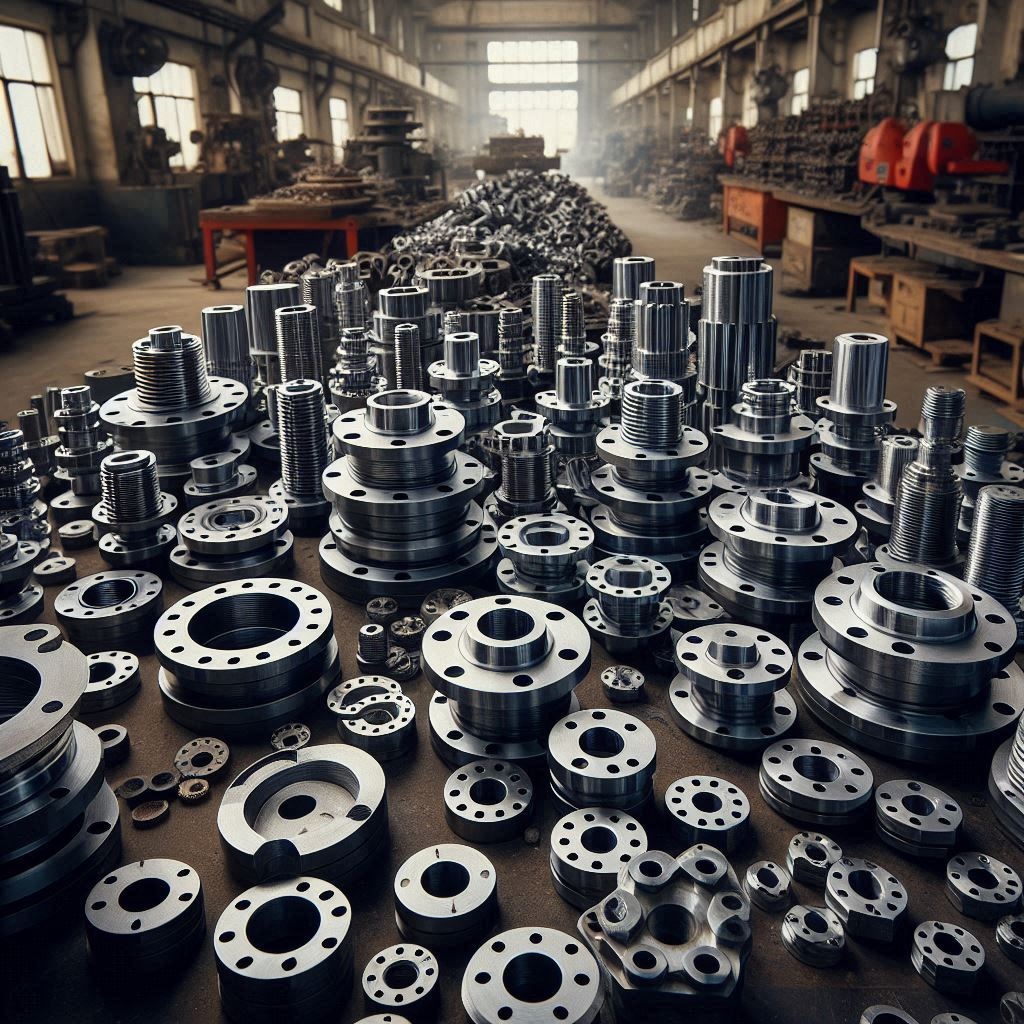
Forged flanges are vital components of piping systems and high pressure applications. Their ability to withstand extreme environments coupled with their durability and mechanical properties make them suitable for almost any industrial application. They are classified as forged flanges, offering superior mechanical strength relative to other types of flanges, e.g., cast flanges, wrought flanges and mechanical devices. Flanged fittings provide a leak-proof connection and longer service life, due to their manufacture through controlled forging processes. Companies rely on forged flanges for their ability to deliver reliable, durable and versatile components that comply with safety, pressure retention, and performance standards required in applications where these qualities are a primary concern.
Oil and Gas Industry
Forged flanges are widely utilized in the oil and gas industry and are some of the biggest users of forged flanges. The oil and gas industry encompasses both upstream, midstream, and downstream processes; most of these processes require the use of forged flanges as they are capable of supporting high temperatures and pressures, as well as being resistant to many chemically aggressive products, such as natural gas and refined petroleum products. Forged flanges are also designed to provide secure connections between pipes while allowing easy access for inspection and maintenance and to allow for future expansion of the piping system in the refinery and processing plant.
Petrochemical and Chemical Processing Plants
Forged flange consumption is prevalent within the oil and gas industry with significant use throughout operations (upstream, midstream, and downstream) from pipelines to wellheads, manifolds, valves, and pressure vessels. Due to their ability to withstand high pressures, temperatures, and corrosive elements (such as crude oil, natural gas, and refined petroleum), forged flanges are ideal for use in these industries because they allow for safe connections of pipes while providing the capability of inspection and maintenance, as well as accommodating future expansions ofyour systems at their facilities (e.g. refineries and processing plants).
Power Generation Sector
Forged flanges are used extensively by power plants (thermal, nuclear and hydro) for steam lines and circulation systems; as well as in the design and build of turbines, boilers and condensers. The majority of forged flange designs are made to withstand very high levels of temperature/pressure fluctuation found in thermal and nuclear power plants. Forged Flange are built to be extremely robust and comply with an array of international standards; therefore they are used on every type of the plant’s critical connection point for which failure cannot occur.
Water Treatment and Desalination Plants
Forged flanges are used extensively by power plants (thermal, nuclear and hydro) for steam lines and circulation systems; as well as in the design and build of turbines, boilers and condensers. The majority of forged flange designs are made to withstand very high levels of temperature/pressure fluctuation found in thermal and nuclear power plants. Forged Flange are built to be extremely robust and comply with an array of international standards; therefore they are used on every type of the plant’s critical connection point for which failure cannot occur.
Marine and Shipbuilding Industry
Forged flanges are used within the marine and shipbuilding industry in ship pipes, ballast systems, fuel handling lines, cooling systems, and offshore platforms. These applications require parts capable of withstanding exposure to seawater, as well as being subjected to vibration and dynamic loads. Using either stainless steel or alloy materials for the manufacture of forged flanges provides both outstanding strength and durability so that flanges perform reliably in demanding marine environments and on offshore drilling rigs.
Construction and Infrastructure Sector
The use of forged flanges is required for large-scale construction/infrastructure projects (HVAC, Fire Protection pipeline, Water Supply Networks, Industrial buildings). Forged flanges can provide a secure connection for piping and can be used in conjunction with thermal expansion systems, making them suitable for Commercial and Industrial Infrastructure. Forged Flanges provide Structural Integrity & Operational Safety over a long-term basis for High Rised Buildings and Industrial Complexes.
Automotive and Heavy Engineering Industries
Forged flanges are commonly found in hydraulic systems, fuel lines, exhausts and manufacturing equipment within the automotive sector and heavy engineering. Flanges are used to join together pipes and other components that are subject to high levels of vibration and pressure. The precise dimensions of forged flanges and their high tensile strength contribute significantly to increased efficiency of systems; they also greatly reduce the chances of a leak or mechanical failure occurring under severe production conditions.
Pharmaceutical and Food Processing Industries
Clean piping systems, processing equipment, and fluid transfer lines in the pharmaceutical and food processing industries are made from forged stainless steel flanges that conform to stringent hygiene and safety regulations. Because of their smooth surface finish, resistance to corrosion, and compliance with industry regulations, these flanges can maintain product purity and prevent product contamination.
Mining and Mineral Processing
Forged flanges are frequently used in ore slurry pipelines, high-pressure process pumps, as well as other varieties of mineral processing machinery, meaning they will experience significant levels of both mechanical stress and a high degree of wear from the abrasive qualities of the materials they contain. As a result, using a forged flange guarantees long-term use with very little upkeep and will provide the high level of strength necessary to handle the maximum operating pressures and flow rates for any given system.
Renewable Energy and Emerging Industries
Flanges, made from forged metal, are seeing an increase in their use across renewable energy construction efforts like wind farm development, bioenergy production, fuel cell manufacturing, etc. They connect various components of a system together while allowing some degree of movement. As we build out clean energy systems around the world, we will expect to see greater usage of reliable forged flange products.
Conclusion
In many industries, forged flanges provide safe, dependable, and efficient means of connecting pipes to one another. Applications include: Oil & Gas; Petrochemical; Power Generation; Water Treatment; Marine; Construction; Automotive; Pharmaceutical; Mining; Renewable Energy major industries that utilize forged flanges. Because of their ability to provide superior strength when used in conjunction with various material types and their ability to meet standardisation requirements imposed by the industry across different countries; forged flanges are considered the go-to product when high-performance and critical applications are being manufactured globally.
Freight Forwarding Services in Canada: How Progressive Cargo Simplifies Global Logistics
Freight forwarding plays a crucial role in today’s interconnected global economy. Business…